Few side dishes are as recognizable on an American restaurant menu as the baked potato. Whether it’s wrapped in foil at a steakhouse, piled high with toppings at a family diner, or served alongside barbecue and seafood, the baked potato has quietly held its place in American food culture for decades. It’s simple, filling, inexpensive, and somehow still feels comforting no matter what generation you grew up in.
But the baked potato’s story started long before it landed next to ribeye steaks and butter cups at restaurants across the country.
The Potato’s Journey to America
Potatoes originally came from the Andes Mountains in South America, where Indigenous communities in modern-day Peru and Bolivia cultivated them thousands of years ago. Spanish explorers brought potatoes back to Europe in the 1500s, though many Europeans were skeptical of them at first. Some believed potatoes were strange or even unsafe because they grew underground.
Eventually, potatoes became one of the most important crops in Europe because they were inexpensive, easy to grow, and incredibly filling. By the 1700s and 1800s, potatoes had spread throughout Europe and eventually made their way into North America.
In early America, potatoes became popular for many of the same reasons people still love them today:
- They were affordable
- They grew well in different climates
- They stored for long periods
- They could feed large families
Over time, potatoes became deeply tied to American comfort food.
How the Baked Potato Became Popular
The baked potato itself likely became common once home ovens became more reliable in the 1800s. Before modern kitchen appliances, many potatoes were boiled or cooked directly in fires and hearths. Baking potatoes in ovens allowed the inside to turn soft and fluffy while the outside developed a dry, slightly crisp skin.
By the late 1800s and early 1900s, baked potatoes were already appearing in hotels, railroad dining cars, and restaurants across the United States. They paired especially well with roasted meats and steaks because they were inexpensive for restaurants to serve but still made a meal feel substantial.
As steakhouses grew in popularity during the mid-1900s, the baked potato became almost automatic on the plate. Restaurants loved them because they:
- Had low food cost
- Could be prepared in large batches
- Filled customers up
- Paired with almost everything
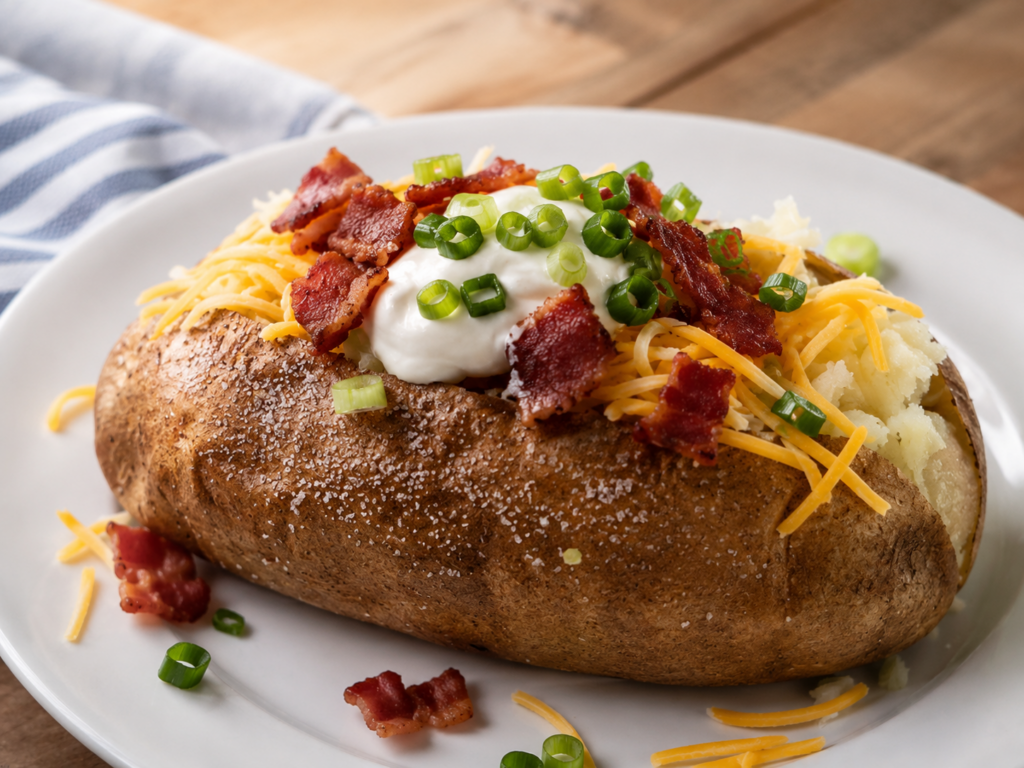
For customers, baked potatoes felt hearty and customizable. Butter, sour cream, chives, bacon, shredded cheese, and chili all became popular toppings over time.
Why Americans Became Obsessed With Baked Potatoes
Part of the baked potato’s popularity comes down to comfort and familiarity. A baked potato is mild, warm, and filling without overpowering the main meal. It also fits almost every type of restaurant:
- Steakhouses
- Diners
- BBQ restaurants
- Seafood restaurants
- Casual chains
- Family restaurants
Unlike fries, a baked potato also feels a little more homemade and substantial. One potato can turn into an entire side dish on its own.
There’s also the texture contrast people love. A properly baked potato has:
- Crispy, seasoned skin
- Fluffy interior
- Rich toppings that melt into the potato
It’s simple food, but when done well, it’s hard to beat.
Did the Baked Potato Peak in Popularity?
The baked potato likely hit its biggest cultural peak during the 1970s through the 1990s.
This was the golden era of large American steakhouse chains and casual dining restaurants. Restaurants like steakhouses, buffet chains, and family dining spots almost always included a baked potato option. Foil-wrapped baked potatoes became especially popular during this period because restaurants could hold them warm for long stretches during busy dinner service.
The 1980s and 1990s also introduced the rise of the “loaded baked potato,” where toppings became bigger and more excessive. Bacon, cheddar cheese, broccoli, chili, ranch dressing, and even pulled pork started appearing on restaurant menus.
For a while, the baked potato became more than a side dish. Some restaurants turned them into full meals.
Why the Baked Potato Never Really Disappeared
Food trends change constantly, but the baked potato has managed to survive through all of them. Even as low-carb diets became popular at different points over the years, restaurants rarely removed baked potatoes completely from menus.
Part of that staying power comes from how adaptable potatoes are. They can feel:
- Rustic
- Healthy
- Indulgent
- Budget-friendly
- Fancy
- Comforting
A baked potato also works for nearly every season. It fits just as naturally next to grilled steak in the summer as it does beside pot roast in the winter.
And while food trends continue to evolve, there’s still something nostalgic about cutting open a hot baked potato and watching the steam rise out before adding butter and salt.
Some foods never really leave American restaurants. The baked potato is one of them.