If you’ve ever made coffee that tasted weak, sour, or oddly bitter, the problem might not be the beans at all. One of the biggest differences between a smooth cup of coffee and an over-extracted one comes down to grind size. Fine-ground coffee and coarse-ground coffee behave very differently once water hits them, and using the wrong grind for your brewing method can completely change the flavor.
Coffee grounds work a lot like cooking ingredients. Smaller particles expose more surface area to water, which means flavors extract faster. Larger grounds extract more slowly. That’s why espresso uses very fine coffee while cold brew and French press use much coarser grounds. Matching the grind size to the brew time is what helps create balanced coffee instead of something bitter or watery.
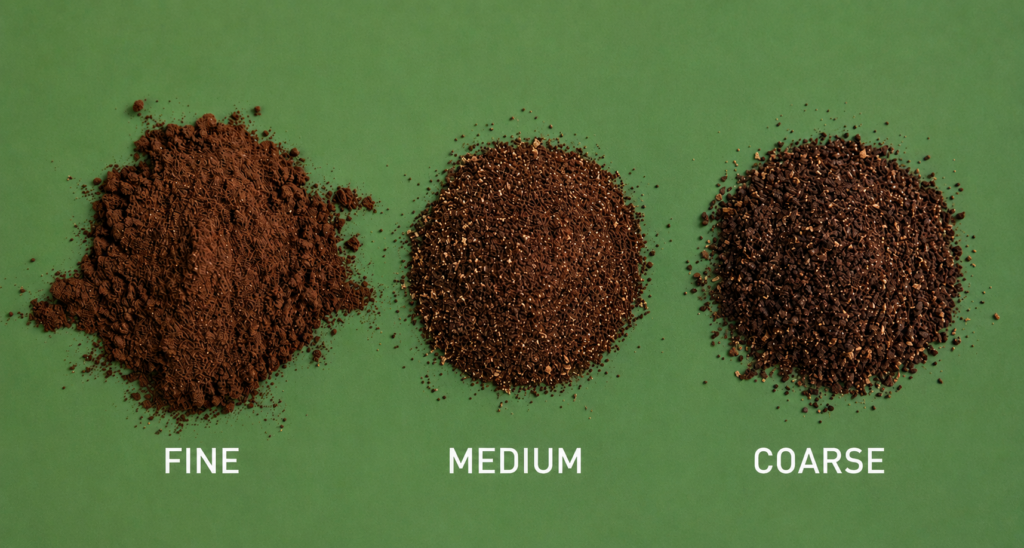
What Is Fine Ground Coffee?
Fine ground coffee has a soft texture that almost feels like sand or powdered sugar depending on how fine it’s ground. Because the particles are so small, water moves through them quickly and pulls flavor out fast.
Fine coffee grounds are best for brewing methods with short extraction times, including:
- Espresso machines
- Moka pots
- AeroPress recipes with short brew times
- Some concentrated coffee methods
Since fine grounds extract quickly, they can become bitter if they sit in water too long. This is one of the most common mistakes people make when trying to brew strong coffee. A finer grind does not always mean “better” or “stronger.” It simply means the coffee releases flavor faster.
If finely ground coffee steeps too long, it can over-extract and develop harsh, bitter flavors. That’s why espresso works in about 25–30 seconds instead of several minutes. The small grounds allow fast flavor extraction without needing a long brew time.
You may also notice that finely ground coffee can clog filters more easily or create muddy coffee if used in the wrong brewer.
What Is Coarse Ground Coffee?
Coarse ground coffee has a much chunkier texture, closer to sea salt or rough breadcrumbs. Because the particles are larger, water takes longer to extract flavor from them.
Coarse grounds are best for slower brewing methods like:
- French press
- Cold brew
- Percolators
- Cowboy coffee
- Some pour-over methods with longer extraction times
These brewing styles allow the grounds to steep longer without becoming overly bitter. Coarse grounds also help reduce sediment in methods like French press, where metal filters are commonly used instead of paper filters.
Cold brew is one of the best examples of why coarse coffee matters. Since cold brew steeps for 12–24 hours, a fine grind would become extremely bitter and muddy. The larger grounds slow down extraction and help create the smoother flavor cold brew is known for.
Why Grind Size Affects Flavor
Grind size controls how quickly water can pull oils, acids, and flavors from the coffee bean.
A grind that’s too fine for the brewing method can cause:
- Bitterness
- Harsh flavors
- Muddy texture
- Slow dripping or clogged filters
A grind that’s too coarse can cause:
- Weak coffee
- Sour flavors
- Thin or watery texture
- Under-extraction
The goal is balance. Fast brewing methods need finer grounds because the water has very little contact time. Slower brewing methods need coarser grounds because the coffee steeps much longer.

A Quick Coffee Grind Guide
| Grind Size | Texture | Best For |
|---|---|---|
| Extra Fine | Powdery | Turkish coffee |
| Fine | Sand-like | Espresso, moka pot |
| Medium | Regular sand | Drip coffee makers |
| Medium-Coarse | Rough sand | Chemex, some pour-over |
| Coarse | Sea salt | French press, cold brew |
| Extra Coarse | Chunky | Cold brew concentrates |
The Best Coffee Usually Starts With Fresh Grinding
Pre-ground coffee works well for convenience, but freshly ground beans usually produce better flavor because the coffee oils and aromas haven’t had as much time to fade away. Burr grinders also tend to produce more even coffee grounds than blade grinders, which helps coffee brew more consistently.
If your coffee suddenly tastes too bitter or too weak, changing the grind size is often one of the fastest ways to improve it without changing the beans themselves.