Choosing the right icing for a birthday cake does more than change the flavor. The type of frosting affects how the cake looks, how easy it is to decorate, how long it can safely sit out, and how the cake should be stored afterward. Some icings stay stable for hours on a party table, while others need refrigeration much sooner.
If you’ve ever wondered whether a cake belongs on the counter or in the refrigerator — or why frosting sometimes turns into a crumb-filled mess while decorating — here’s a complete guide to the most common cake icings, how long they last, and the best way to frost and store a cake properly.
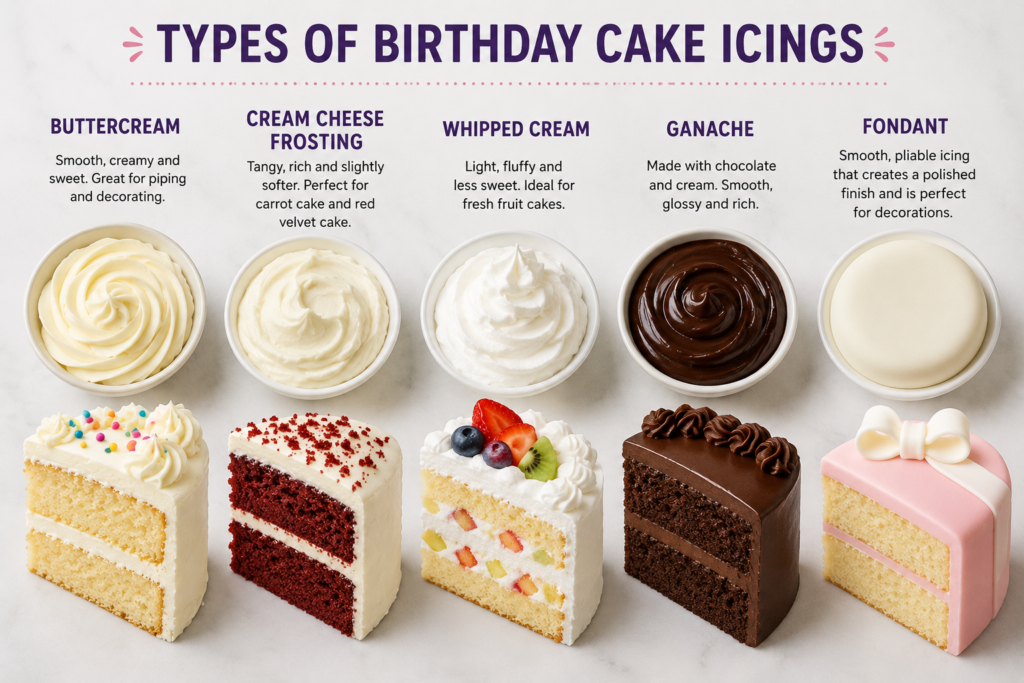
Buttercream Frosting
Buttercream is the most common frosting used for birthday cakes. It’s smooth, easy to spread, and works well for piping decorations. American buttercream is sweeter and slightly crusts on the outside, while Swiss and Italian buttercream are silkier and less sweet.
Buttercream cakes can usually sit at room temperature for about 1-2 days if the room is cool and the frosting was made properly. If the cake contains fillings like cream cheese, whipped cream, fresh fruit, or custard, refrigeration is required much sooner.
One advantage of buttercream is that it actually helps seal moisture into the cake. A fully frosted cake often stays softer longer than an unfrosted cake.
Cream Cheese Frosting
Cream cheese frosting is popular on carrot cake, red velvet cake, spice cake, and some chocolate cakes. It has a tangier flavor than buttercream and is softer in texture.
Because it contains cream cheese and dairy, this frosting should not sit out for long periods. In most cases, cream cheese frosting should only remain at room temperature for about 2 hours before it needs refrigeration.
Cakes with cream cheese frosting are best stored in the refrigerator, but they should be brought back to room temperature before serving. Cold cake tends to taste drier and less flavorful straight from the fridge.
Whipped Cream Frosting
Whipped cream frosting is light, airy, and less sweet than traditional buttercream. It’s commonly used on fresh fruit cakes or lighter-style birthday cakes.
This is one of the least stable frostings for room temperature storage. Whipped cream cakes should only stay out for about 1-2 hours before refrigeration becomes necessary, especially during warmer weather.
These cakes should always be refrigerated and are best eaten within 1-2 days. Whipped cream can start to separate or lose volume over time.
Ganache
Chocolate ganache is made from chocolate and heavy cream. Depending on the ratio, it can be pourable, spreadable, or whipped into a frosting.
Ganache-covered cakes are fairly stable because the chocolate firms up as it cools. Most ganache cakes can sit at room temperature for about 2 days unless the filling contains perishable ingredients.
Ganache also helps lock moisture into the cake and creates a smooth finish that protects the layers underneath.
Fondant
Fondant is the smooth decorative covering often seen on custom birthday cakes. It creates a polished look and works well for detailed cake designs.
Fondant itself is shelf-stable, but the storage rules depend on the frosting and fillings underneath it. Most fondant-covered cakes are stored at cool room temperature rather than in the refrigerator because refrigeration can create condensation and make the fondant sticky.
A fondant cake with buttercream underneath can usually remain safely covered on the counter for 1-2 days.
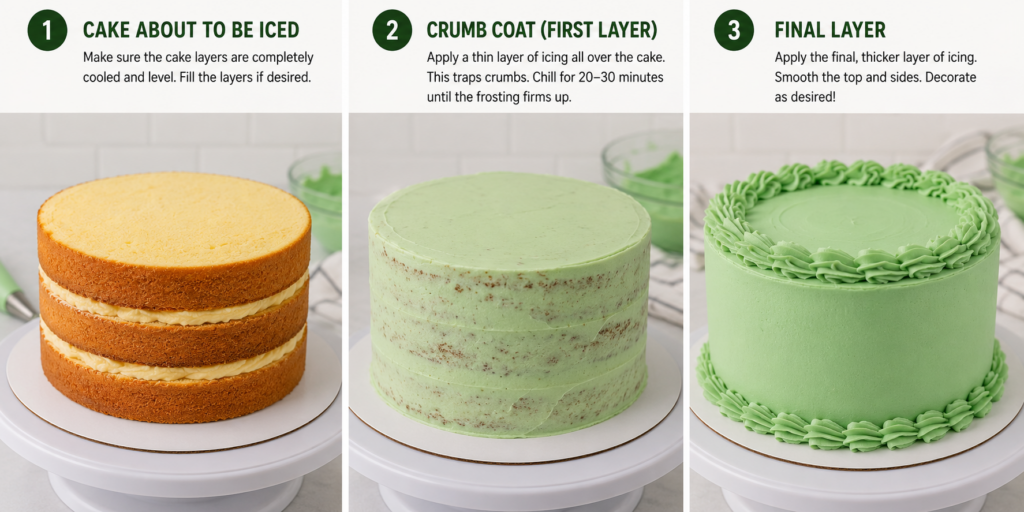
How to Frost a Cake Without Pulling Up Crumbs
One of the biggest frustrations when decorating a cake is crumbs mixing into the frosting. The easiest way to prevent this is by using what bakers call a “crumb coat.”
A crumb coat is a very thin first layer of frosting that traps loose crumbs against the cake. Instead of trying to make the cake look perfect immediately, the goal of this first layer is simply to seal everything in place.
After applying the thin first coat, place the cake into the refrigerator for about 20-30 minutes so the frosting can firm up slightly. Once chilled, add the final thicker layer of frosting on top. Since the crumbs are already sealed underneath the crumb coat, the second layer goes on much smoother and cleaner.
A few other things help prevent crumbly frosting:
- Make sure the cake layers are fully cooled before frosting them
- Use a serrated knife to level domed cake layers before icing
- Brush loose crumbs off the cake before applying frosting
- Avoid pressing too hard with the spatula while spreading frosting
- Use an offset spatula or bench scraper for smoother results
Professional-looking cakes usually come from patience more than fancy decorating skills. The crumb coat step is what creates that clean bakery-style finish.
How Long Is a Frosted Cake Safe to Eat?
Most birthday cakes are still safe to eat for several days after frosting has been applied, but the exact timing depends on the icing and fillings.
Here’s a general guideline:
- Buttercream cakes: about 3-4 days
- Cream cheese frosting cakes: about 3-4 days refrigerated
- Whipped cream cakes: about 1-2 days refrigerated
- Ganache cakes: about 3-4 days
- Fondant cakes: about 3-4 days
The cake itself usually dries out before it becomes unsafe. Texture is often the first thing to decline. Cakes exposed to air lose moisture quickly, especially once slices have been cut.
If the cake smells sour, develops moisture beads, has an off texture, or the frosting begins separating, it’s best to throw it away.
The Best Way to Store a Birthday Cake
One of the biggest mistakes people make is placing an uncovered cake directly into the refrigerator. Refrigerators pull moisture out of baked goods very quickly, which can leave cake dry and stale overnight.
For cakes that are safe at room temperature, storing them covered on the counter is usually the best option. A cake carrier or cake dome works best because it protects the frosting while limiting air exposure.
If refrigeration is required, keep the cake covered as tightly as possible. Once chilled, allow the cake to sit at room temperature for about 30-60 minutes before serving. This softens the frosting and improves the texture of the cake layers.
For leftover slices, plastic wrap pressed gently against the cut sides helps keep the cake from drying out.
Counter vs Refrigerator: Which Is Better?
In general:
- Buttercream and ganache cakes usually do better on the counter for short-term storage
- Cream cheese and whipped cream cakes belong in the refrigerator
- Fondant cakes are usually best kept at cool room temperature unless the filling requires refrigeration
The biggest goal is keeping air away from the cake while also maintaining a safe temperature for the type of frosting being used.
A properly stored birthday cake not only lasts longer, but it also tastes noticeably fresher when it’s time for the next slice.