Few side dishes are as recognizable at a backyard barbecue or fried chicken restaurant as coleslaw. It shows up next to pulled pork sandwiches, seafood baskets, picnic plates, and deli sandwiches almost automatically. But despite how common it is today, coleslaw actually has a long history that stretches back hundreds of years — and technically, yes, it really is a salad.
Where Coleslaw Originally Came From
The roots of coleslaw trace back to the Netherlands in the 1700s. The word “coleslaw” comes from the Dutch term koolsla, which translates to “cabbage salad.” The word kool meant cabbage, while sla was short for salad.
At the time, Dutch settlers were combining shredded cabbage with vinegar, oil, and simple seasonings because cabbage was inexpensive, easy to grow, and lasted a long time without spoiling. Long before refrigeration existed, cabbage became an important food throughout Europe because it could survive cold weather and remain edible for weeks or even months.
When Dutch immigrants eventually brought their cooking traditions to America, cabbage salads came with them. Over time, the dish evolved into what Americans now recognize as coleslaw.
Was Coleslaw Always Made With Mayonnaise?
Not originally.
Early versions of coleslaw were usually vinegar-based instead of creamy. The mayonnaise-style coleslaw most Americans know today became popular much later, especially after commercial mayonnaise became widely available in the early 1900s.
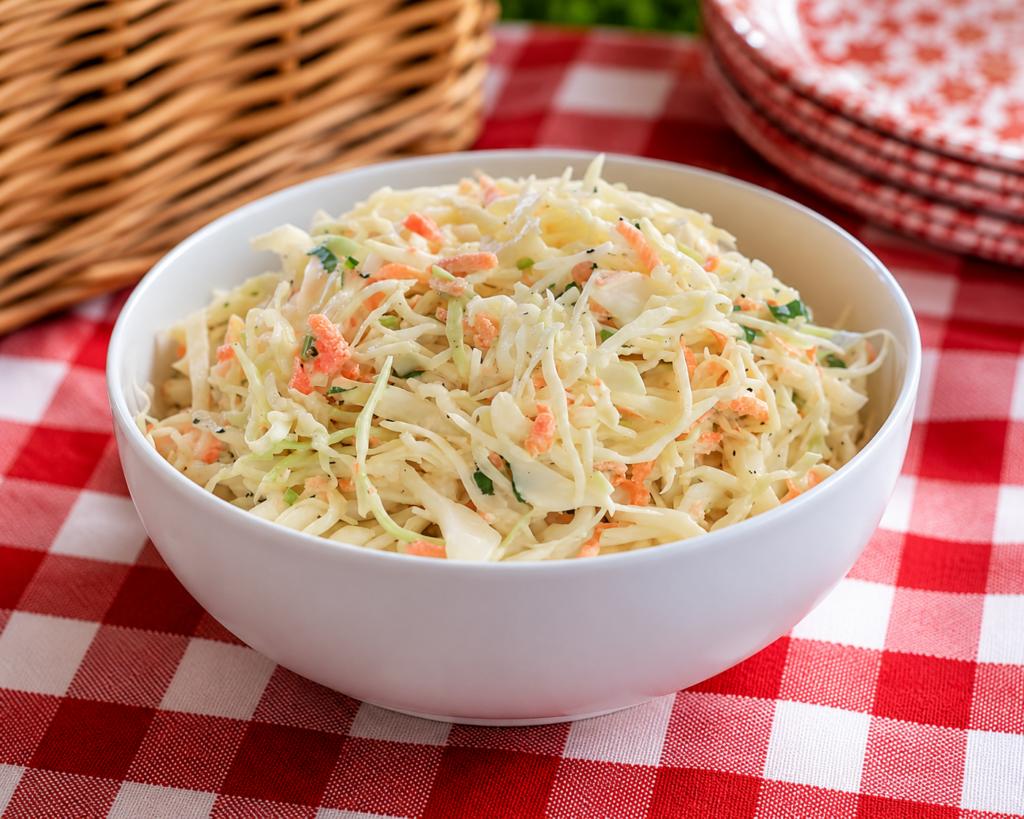
Once brands like Hellmann’s and other prepared condiment companies made mayonnaise easy to buy at grocery stores, creamy coleslaw exploded in popularity. Restaurants and home cooks began mixing shredded cabbage with mayonnaise, sugar, vinegar, and carrots to create the sweet-and-tangy version many people expect today.
Even now, different regions of the United States still prefer different styles:
- Southern barbecue restaurants often serve creamy mayonnaise-based slaw
- North Carolina barbecue sometimes uses a tangy vinegar slaw
- Seafood restaurants frequently pair lighter slaws with fried fish
- German-inspired slaws may include mustard or warm vinegar dressings
Is Coleslaw Actually Considered a Salad?
Technically, yes.
Coleslaw is classified as a salad because it combines raw vegetables with a dressing. While many people think of salads as leafy greens like lettuce or spinach, salads can be made from almost any chopped or shredded ingredients.
That means potato salad, macaroni salad, pasta salad, and coleslaw all fall into the same broader category.
What makes coleslaw different from many other salads is that cabbage is sturdy enough to hold up under heavier dressings without becoming soggy quickly. In fact, cabbage often softens and improves slightly after sitting in dressing for a few hours, which is one reason coleslaw works so well for parties and cookouts.
Why Coleslaw Became Such a Popular Side Dish
Coleslaw became popular partly because it solved several practical problems for restaurants and home cooks.
Cabbage is inexpensive, widely available, and feeds a lot of people. A single head of cabbage can produce a large bowl of slaw for very little money, making it one of the most budget-friendly side dishes around.
It also balances rich foods extremely well. Fried chicken, barbecue, burgers, hot dogs, and seafood are all heavy, salty, or smoky foods. Coleslaw adds crunch, acidity, and freshness that help cut through those heavier flavors.
That contrast is one reason coleslaw became deeply connected to American barbecue culture. The cool crunch beside hot smoked meat simply works.
Restaurants also love coleslaw because it can be prepared ahead of time, stored cold, and served quickly during busy meal rushes.
Why People Either Love It or Hate It
Coleslaw tends to be one of those foods people feel strongly about.
A lot of that comes down to texture and sweetness. Some people dislike overly wet or sugary slaws, while others love creamy versions with extra dressing. The texture of raw cabbage can also be divisive compared to softer side dishes like mashed potatoes or macaroni and cheese.
Still, coleslaw has survived for centuries because it continues to adapt. Today you can find versions made with:
- Purple cabbage
- Apple cider vinegar
- Jalapeños
- Apples
- Broccoli stems
- Yogurt-based dressings
- Asian-inspired sesame dressings
The basic idea remains the same: crisp vegetables mixed with a flavorful dressing.
The Side Dish That Never Really Went Away
Unlike trendy foods that come and go, coleslaw has stayed remarkably consistent for generations. From Dutch cabbage salads centuries ago to modern barbecue restaurants across America, it has remained a reliable side dish because it is affordable, refreshing, and easy to pair with almost anything.
For a food made mostly from cabbage, that is a pretty impressive run.